
Risk of Electric Shock (Symptoms Based on Current Intensity and Duration of Exposure)
Author: tonagaiExecutions: 14658
※ This library was created by a member. This site is not responsible for its content.
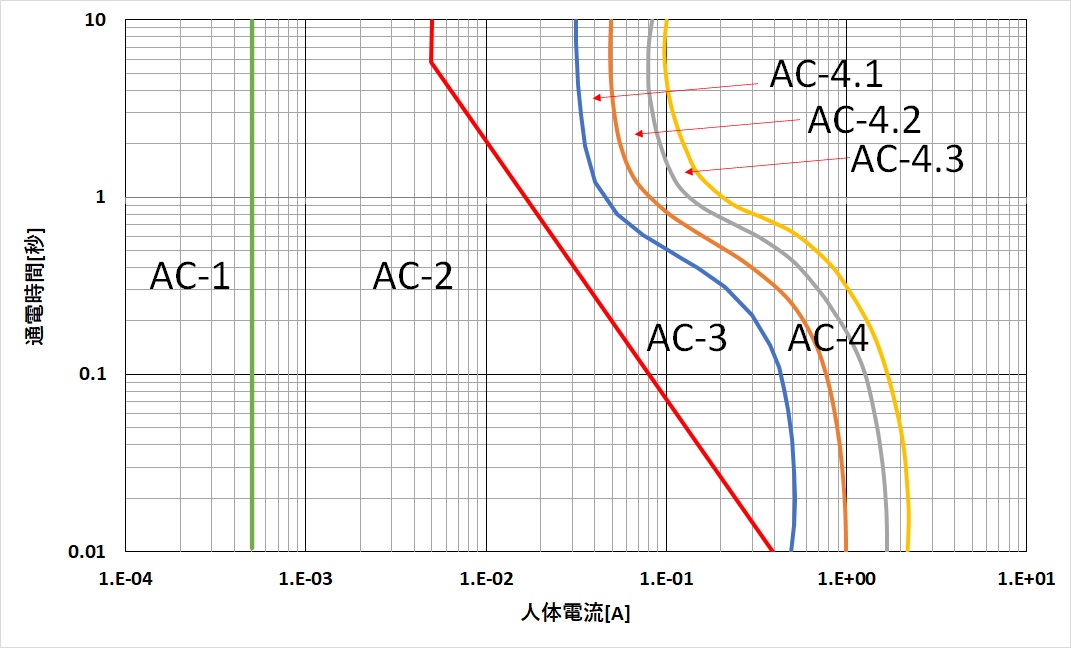
Even at low voltages, it is dangerous if an electric current flows through the human body. In particular, the level of danger varies depending on the current value (current through the body) and the duration of the current flow (exposure time). Alternating current (AC) is more dangerous than direct current (DC), and this calculator performs the classification specified in IEC 60479-1 (15–100 kHz).
Classification:
AC-1: No reaction
AC-2: No adverse physiological effects
AC-3: Causes reversible cardiac disorders, including convulsive muscle contractions, respiratory distress, temporary cardiac arrest, and atrial fibrillation
AC-4: Causes cardiac arrest, respiratory arrest, or severe burns, posing a risk of death
AC-4.1: Probability of ventricular fibrillation approximately 5% or less.
AC-4.2: Probability of ventricular fibrillation approximately 50% or less.
AC-4.3: Probability of ventricular fibrillation approximately 50% or more.
| Symptoms |
- Related links

No customer feedback for this calculation yet.